
Un miroir aux allouettes
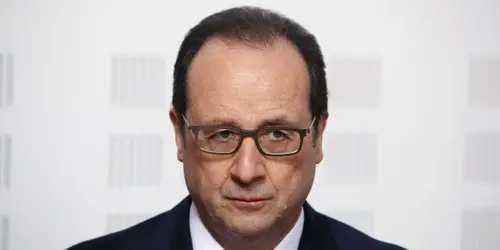
Hollande et Valls affirme que la réforme El Khomri est un processus de modernisation nécessaire pour combattre un chômage qui a atteint un niveau sans précédent. Cependant, on peut aussi comprendre l’origine de cette réforme en tenant compte du contexte post-2008. En réponse à la crise, la majorité des gouvernements européens ont adopté la même stratégie : sauver les banques avec l’argent public, c’est à dire les impots payés par monsieur et madame tout-le-monde, et combler les déficits induits en demandant aux mêmes messieurs dames de se résigner à l’austérité. De même, derrière l’écran de fumée du fameux taux de chômage, ce sont les travailleurs qui sont à nouveau forcés de s’adapter et de se résigner à voir leurs conditions de travail se dégrader et la protection syndicale se réduire. C’est toute l’idéologie néolibérale qui se révèle au cœur de la loi Travail.
Au même instant : le Brexit
Le Brexit pourrait offrir une opportunité pour une version plus juste et égalitaire de l’Europe capitaliste. Grâce à leur position de force au sein du trio de tête, la Grande Bretagne et l’Allemagne, ont influé sur la construction européenne pour plus de mondialisation et de libre-échange. La France a maintenant deux options. Poursuivre son virage néolibéral en adoptant le style anglo-saxon moderne à l’égard du travail et de l’emploi, au dépend des droits sociaux. Ou bien profiter de l’absence de la Grande-Bretagne pour proposer une nouvelle vision pour l’Europe. Une vision qui s’opposerait au traité transatlantique et ses corollaires, qui réduirait les énormes écarts de richesse, qui traiterait les questions environnementales avec sérieux, qui combattrait l’évasion fiscale et améliorerait les droits des citoyens et des travailleurs à travers le continent.
Mais il faudrait balayer devant sa porte avant de proposer une nouvelle vision pour une Europe du 21e siècle plus juste et plus égalitaire. La férocité avec laquelle le gouvernement socialiste a imposé la loi Travail démontre à quel point il a intégré la doctrine des gouvernements post-Reagan/Thatcher, qu’ils soient de droite ou de gauche. Pour le moment, il continuera de préférer l’affrontement avec la rue, plutôt que de s’opposer aux forces du capitalisme européen tant que cela restera la solution la moins dangereuse. Bien que la loi Travail ait été adoptée via le 49-3, elle n’est pas encore appliquée. La capacité de résistance des Français à ce nouveau démantèlement du droit du travail pourrait créer un précédent ???, en France, mais aussi en Europe. Chacun peut prendre part aux différentes manifestations à venir, telle que celles prévues le 15 septembre prochain, et participer à des grèves ou des actions locales et nationales.
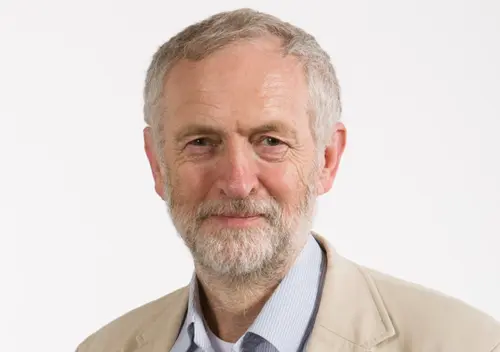
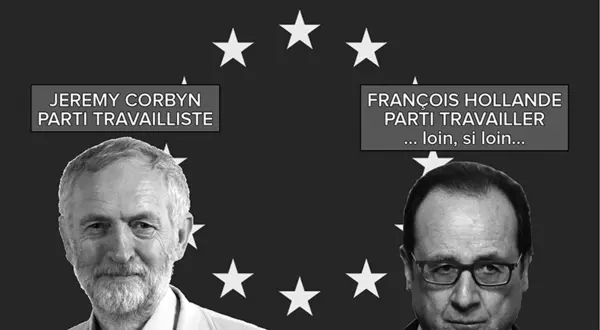
Dans ce contexte, les changements politiques en Grande-Bretagne offrent une seconde opportunité à la France, notamment grâce à l’important soutien à la base dont bénéficie Jeremy Corbyn, leader du parti travailliste : il peut se vanter d’avoir le plus grand nombre d’adhérents de tous les partis de l’Europe occidentale. Il confirme ainsi qu’il est encore possible pour la gauche de reprendre de la voix.
In the short term the solutions may be easier than they appear. The present government will only continue to try and ‘fix’ economic instability by targeting ordinary working people at the bottom as opposed to reassessing fundamental imbalances at the top, so long as that remains the less conflictual option. All of us can partake in upcoming manifestations such as that planned for the 15th September, along with strikes and national and local actions, because this particular dispute is not sector dependent and concerns the future rights of every French worker.
This opportunity of creating a fairer and more equal 21st century Europe must begin at home, with the extent that we as citizens accept the content of la reforme de la loi travail and its undemocratic implementation through article 49.3 setting a precedent for the future.
La Loi El Khomri’s basic tenets of increased demands on labour, though greater employment flexibility and longer working hours is coupled with reductions in trade-union representation and pay rates such as overtime or night-work. This gives justification to the CGT’s claim of un retour au 19eme siècle under the changes. The analogy of the 19eme siècle applies more widely than this due to the imposition of la loi Travail outside of the democratic process through article 49.3. This heralds a frightening new era for European societies, one in which the state’s protection of the rights of the citizen gives way to the economic interests of private enterprise above all else.
In the short term the solutions may be easier than they appear. The present government will only continue to try and ‘fix’ economic instability by targeting ordinary working people at the bottom as opposed to reassessing fundamental imbalances at the top, so long as that remains the less conflictual option. All of us can partake in upcoming manifestations such as that planned for the 15th September, along with strikes and national and local actions, because this particular dispute is not sector dependent and concerns the future rights of every French worker.
In the long term, Britain’s exit from the EU could offer an opportunity for a fairer, more egalitarian version of European capitalism. The EU’s priority commitment to globalization and the free-market has been partly driven by the strength of Britain and Germany’s positions within the ‘big three’. France may now adopt an even greater drive towards neo-liberalism and modern Anglo-Saxon attitudes towards labour and employment at the expense of social rights, starting through policies such as La Loi El Khomri. However, France’s other opportunity in Britain’s absence is to readdress Europe’s priorities. France could now offer a viable vision for 21st century European capitalism. A vision that opposes TTIP and CETA, reigns in such huge disparities in wealth, offers greater workable regulation of big business, properly addresses environmental concerns, tackles corporate crime and tax avoidance and enhances both workers and citizens’ rights across the continent. This opportunity of creating a fairer and more equal 21st century Europe must begin at home, with the extent that we as citizens accept the content of la reforme de la loi travail and its undemocratic implementation through article 49.3 setting a precedent for the future.
In the context of la loi Travail this means visibly and repeatedly opposing it and supporting trade unions and organizations such as the CGT, FO, FIDL, FSU, UNEF, UNL et Solidaires in their opposition to the reform in its current format. The Parti Socialiste may also be more receptive to compromise if opposition continues into election year in 2017. Moreover all of us can partake in upcoming manifestations such as that planned for the 15th September, along with strikes and national and local actions, because this particular dispute is not sector dependent and concerns the future rights of every French worker. In the long term, Britain’s exit from the EU could offer an opportunity for a fairer, more egalitarian version of European capitalism. The EU’s priority commitment to globalization and the free-market has been partly driven by the strength of Britain and Germany’s positions within the ‘big three’. France may now adopt an even greater drive towards neo-liberalism and modern Anglo-Saxon attitudes towards labour and employment at the expense of social rights, starting through policies such as La Loi El Khomri. However, France’s other opportunity in Britain’s absence is to readdress Europe’s priorities. France could now offer a viable vision for 21st century European capitalism. A vision that opposes TTIP and CETA, reigns in such huge disparities in wealth, offers greater workable regulation of big business, properly addresses environmental concerns, tackles corporate crime and tax avoidance and enhances both workers and citizens’ rights across the continent. This opportunity of creating a fairer and more equal 21st century Europe must begin at home, with the extent that we as citizens accept the content of la reforme de la loi travail and its undemocratic implementation through article 49.3 setting a precedent for the future.
Whilst the national impact of La Loi El Khomri has received notable media focus and public debate, the implications of la reforme de la loi travail in an international context demands attention. Following la Crise financiere of 2008, progressive calls for the re-evaluation and remodeling of European capitalism were heard across Europe. These calls were silenced by successive governments who perversely attempted to save neo-liberal market capitalism by abandoning laissez-faire economics – French and British governments ensured that taxpayers frantically bailed out the private banking sector, with failing banks such as RBS and Lloyds becoming 80% and 45% publically owned respectively between 2008 and 2011. Sadly, these ‘re-discovered socialist principles’ in state supported banking did not extent to government’s treatment of their working populations who had funded the bail-outs. Although investment banks got away lightly with only limited regulation, ordinary citizens were expected to support the huge deficit increases through economic austerity policies, such as severe cuts in public service spending and pension age increases.
Jack Bright (an Englishman in Corrèze), traduit par Julie Devès